
9 Reasons You MUST Grow Comfrey in Your Garden This Year
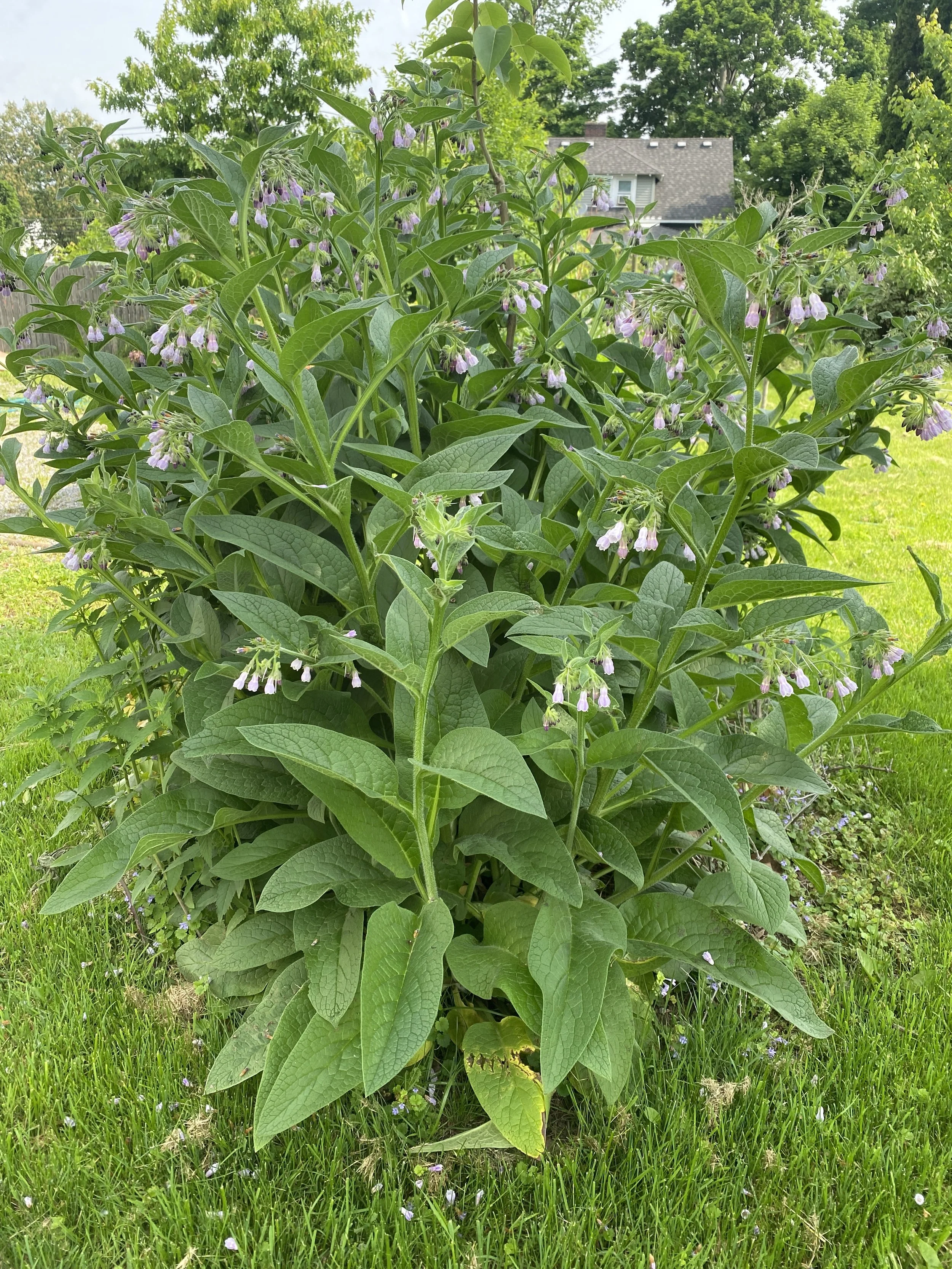
Comfrey planted beneath a 2-year-old pear tree in my backyard. Flowering and towering in June!
March 25, 2025
Comfrey is one of those plants I feel I have a strong connection to, and it could be because it’s so dang easy to grow. My favorite plants are the resilient ones. They come back year after year no matter the hardships they face, whether it’s a deep below-freezing winter or a hot, droughty summer (cue Yarrow, Stinging Nettle, Elderberry and Comfrey that check all these boxes… and happen to all be medicinal plants). What a line up!
We’ve been growing comfrey on the flower farm for years, and in 2020, I planted it in my backyard for the first time, beneath our fruit trees. I was inspired by the permaculture method of Fruit Tree Guilds, which is when an edible fruit tree is underplanted with plants that provide beneficial services to the trees (as opposed to just mulching the tree or growing grass underneath it). I will discuss more about how comfrey works in a fruit tree guild below.
My point is, comfrey is a wonder plant. It should be in every true gardener’s garden… and by “true” gardener, I kindly mean a person who is dedicated to really knowing their garden, intuitively feeling out their plants, and dutifully giving the soil what it needs to thrive.
Related: Building Healthy Organic Garden Soil + Soil Food Web
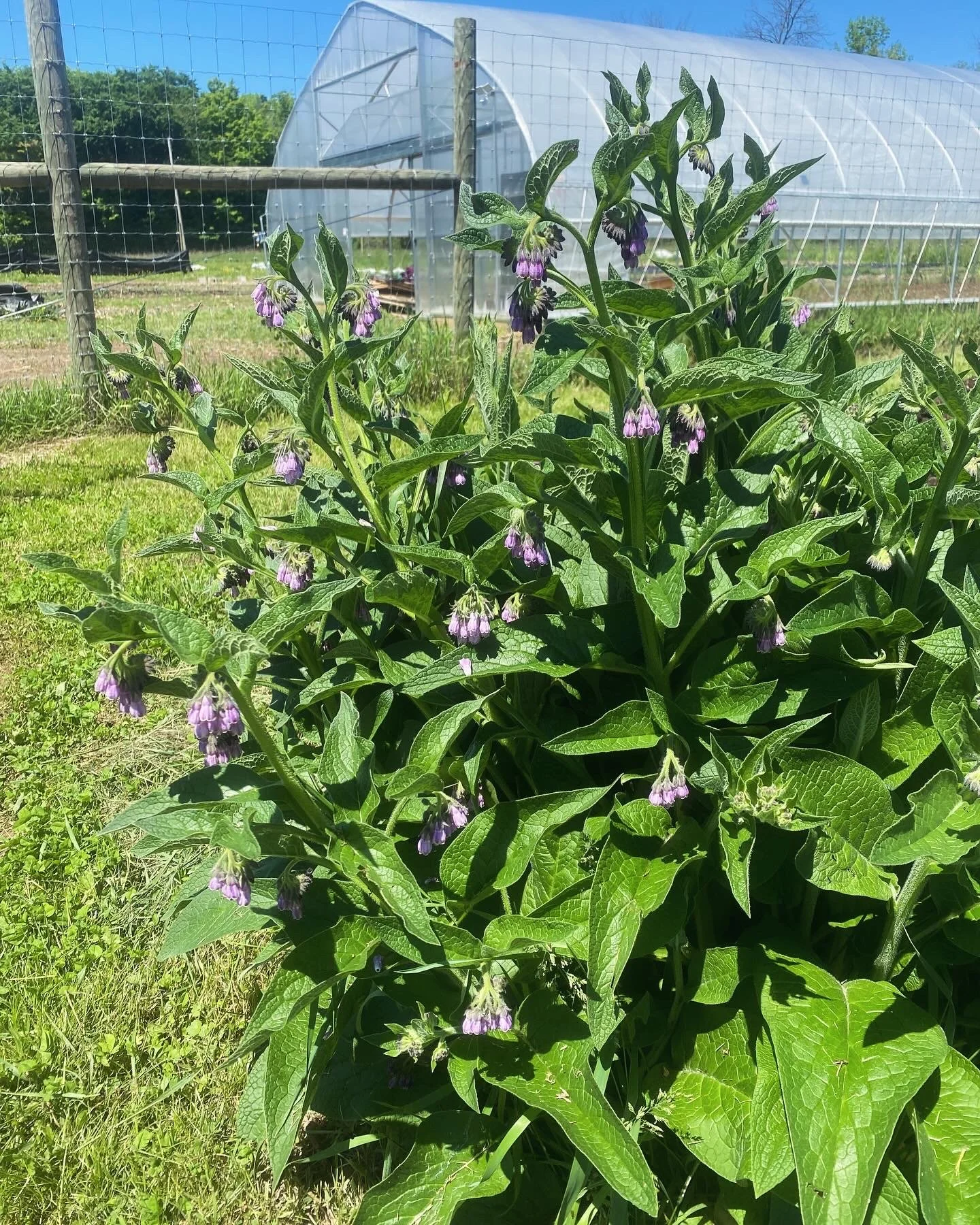
Crown Cuttings of glorious Comfrey! One of our favorite, easy-to-grow plants that delivers soil nutrition and feeds pollinators.
9 Reasons Why you MUST Grow Comfrey
Comfrey is impossible to kill and will grow anywhere in full or part sun
The biggest concern most people have when choosing a new plant for the garden is, How hard is this thing gonna be to keep alive? I’ll be honest — you couldn’t kill comfrey if you tried.
Comfrey grows a deep taproot, mining water and nutrients from deep within the earth. Because of its taproot system, comfrey requires no water, no fertilizer, and no care from you whatsoever during the growing season (except cutting back old leaves so new leaves can regrow).
All said, once you pick a spot for comfrey, know that it will always be there. Comfrey will grow from a tiny piece of root left in the soil, so if you try to dig it out, even the smallest root pieces left behind will grow new plants. So pick a spot in your yard where nothing else will grow (there does need to be at least partial sun, and full sun is recommended). Comfrey will grow there, and you will be amazed.
comfrey asks nothing of you: no fertilizer, no water, nothing
I just said this, but it’s worth repeating. Comfrey’s deep taproot system mines all the water and nutrients it needs on its own, requiring nothing from the gardener.
comfrey provides free, natural fertilizer for the garden
Comfrey is known as a “nutrient accumulator” in the Permaculture world. That deep taproot system I just mentioned works hard to mine nutrients from deep within the earth, pulling minerals up and storing them in its leaves. When leaves are cut back or die and are added to the soil, those nutrients become available for soil microbes to convert them into nutrients for your garden plants. So if you have fruit trees, I encourage you to plant comfrey underneath them!
This is why comfrey is such an incredible garden plant — it provides the best, free fertilizer and source of organic matter for your garden. We grow a whole 75-ft row of it on the farm for use as fertilizer!
To use comfrey in the garden, simply cut back the fresh (or dried/dead) leaves and add to the top of your soil during soil prep, or gently incorporate the leaves down into your soil using a compost fork (see our method for gentle no-till soil prep here).
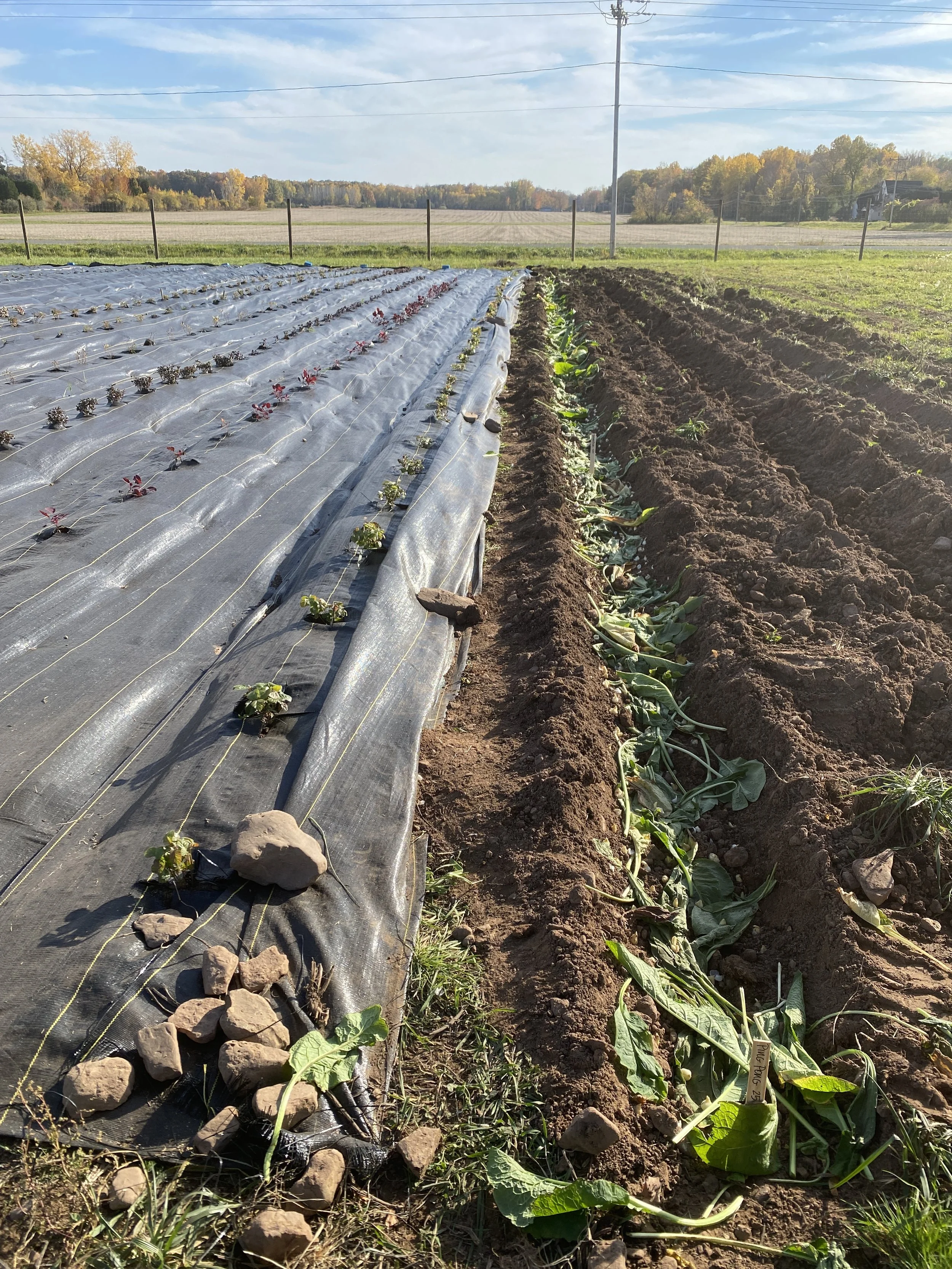
On the right, we filled a trench with comfrey leaves after planting perennial Allium bulbs. The comfrey adds organic matter and natural fertilizer to the bed.
You can also make a liquid “comfrey tea” fertilizer by adding fresh leaves to a bucket of water and letting it sit outside for a week (works best in warm/hot temperatures). When the water is black and smells absolutely terrible, it is ready to use! Simply dilute 1 cup of comfrey tea in your watering can, and water your garden with it. This is an incredible, natural, free, nutrient powerhouse of a fertilizer for your vegetables, herbs, flowers and perennials!
Related: How to Make Compost Tea - Our Amazing Recipe
comfrey provides free mulch
Like we do on the flower farm, you can grow comfrey simply as a free mulch / soil amendment. When comfrey reaches its peak height in June, we cut the plants to the ground and use all the green leaves and stems as mulch in our perennial beds. We simply leave the stems whole — it’s not necessary to chop anything up.
As the stems and leaves break down and add nutrients to the soil, they also provide insulation, preventing the soil surface from baking on the hottest summer days and they also block sunlight to prevent tiny weed seeds from germinating.
When the comfrey plants are chopped at the base, it signals the plant to immediately start regrowing a fresh set of leaves.
Related: Using Paper Mulch and Cardboard to Suppress Weeds in High Tunnel
Comfrey comes back bigger year after year
Your comfrey plant will spread at the base of the plant and will get bigger every year. Because of this growth habit, comfrey is a wonderful plant for filling in blank space in the landscape. This is a slow process and the plant can be tamed by digging sections of it out if you don’t want it to get any bigger.
Comfrey is the first plant to green up and flower in the garden
In our Zone 6b, comfrey shoots will begin to show when it’s still snowing and freezing outside. Real growth will begin in April and the leaves will be a sizeable, lovely rich green by early May. By the end of May into June, comfrey will be the first fully-grown, greened and flowered plant in your garden!
Comfrey is a great plant for waking up your garden early on. Our comfrey plants reach 3-4 ft in height when in full flower.
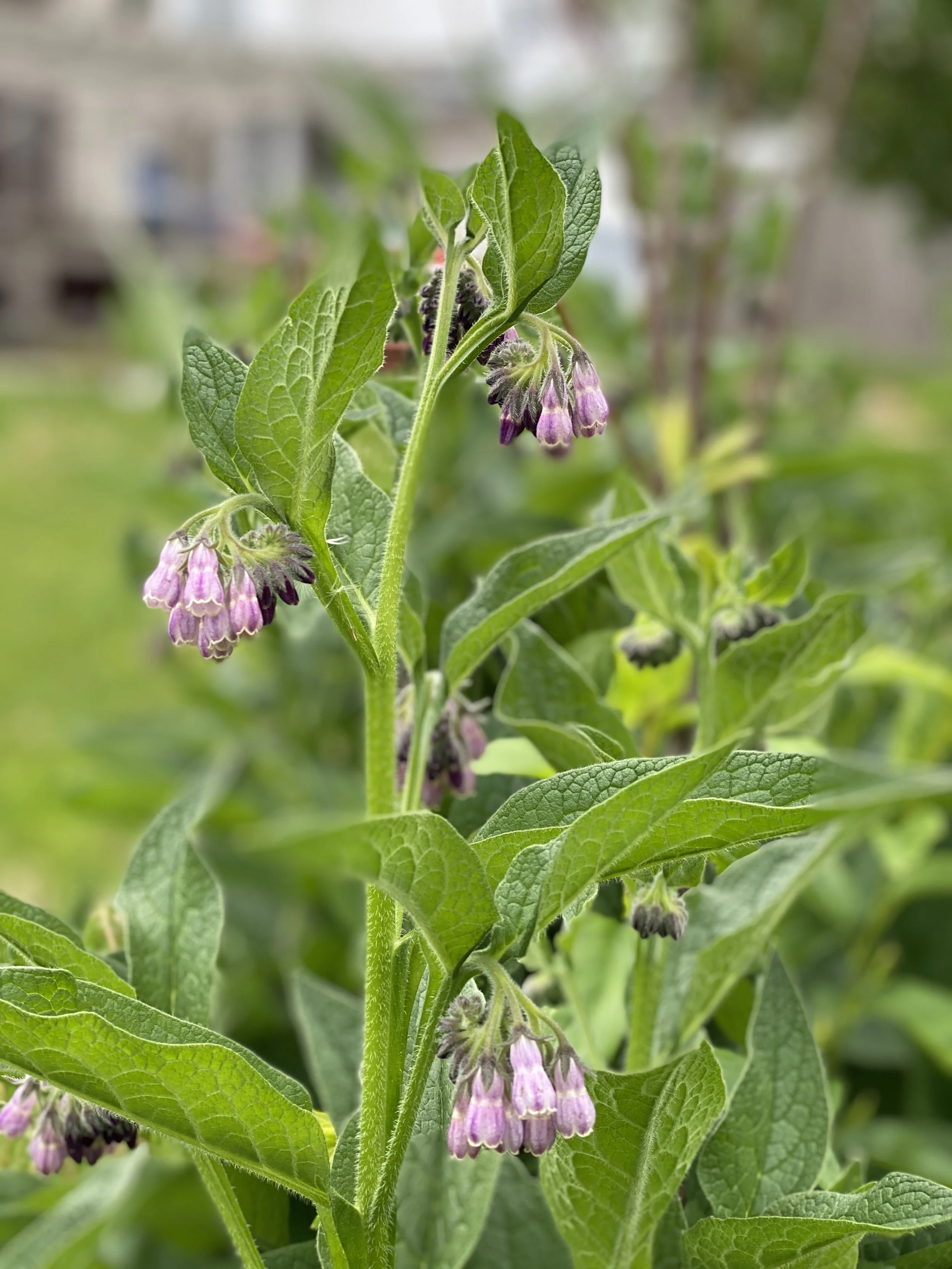
Comfrey flowers on a full-grown plant in June. When properly hydrated, comfrey works great as a cut flower filler in bouquets and arrangements, believe it or not!
comfrey is animal-proof. even deer won’t eat it!
I have a huge deer population, plus rabbits, voles, raccoons, possums — you name it. Not a single one of these animals is remotely interested in comfrey. During some winters, voles will tunnel through the comfrey roots, but comfrey is so resilient that even the worst vole damage won’t kill it.
Related: 14 Steps to Get Rid of Voles in the Garden
comfrey is an early food for bees and other pollinators
Bees — especially the big chubby bumblebees — LOVE comfrey blossoms! Comfrey is a pollinator magnet and provides a rich source of nectar for pollinators on the early side, right around the time dandelions are in bloom.
the variety of comfrey we sell does not make seeds. It does not spread and is not invasive.
Another concern when introducing a new plant is, Will this spread seeds all over my yard and will I be weeding it forever?
Absolutely not! The variety of comfrey we sell — German Bocking-14 — is a sterile variety and only grows through propagation of the roots. I have been growing this same variety of comfrey for years now, and it has never shown up in other areas. It truly is a sterile variety and therefore, non-invasive.
Crown Cuttings of glorious Comfrey! One of our favorite, easy-to-grow plants that delivers soil nutrition and feeds pollinators.
The Only Potential Issue with Comfrey
There is only one issue I’ve experienced with comfrey, and that is comfrey is susceptible to powdery mildew. This poses no issues at all at my farm or even in my backyard. When leaves have powdery mildew, I still use them as a mulch and soil amendment. Powdery mildew on comfrey will not necessarily transfer to other plants in your garden because each species of plant attracts a different species of mildew.
If you are using comfrey as a landscape plant, you may want to keep the powdery mildew in mind from a beauty standpoint. The way around this is to simply cut the plant down to the ground when it becomes too mildewy-looking and let the greens regrow.
Is Comfrey Edible or Medicinal?
Comfrey is a medicinal plant that, when made into a topical poultice or salve, can help soothe inflammation of muscles, joints, and minor wounds. Comfrey should NEVER be ingested — it is toxic to the liver. Please take care when using for medicinal purposes.
In conclusion, I genuinely hope this post has helped you understand the comfrey plant better, so much so that you might give it a try in your garden this year! The incredible benefits of this plant far outweigh the powdery mildew.