
Magnificent Elderberry: Growing Elder from Cuttings
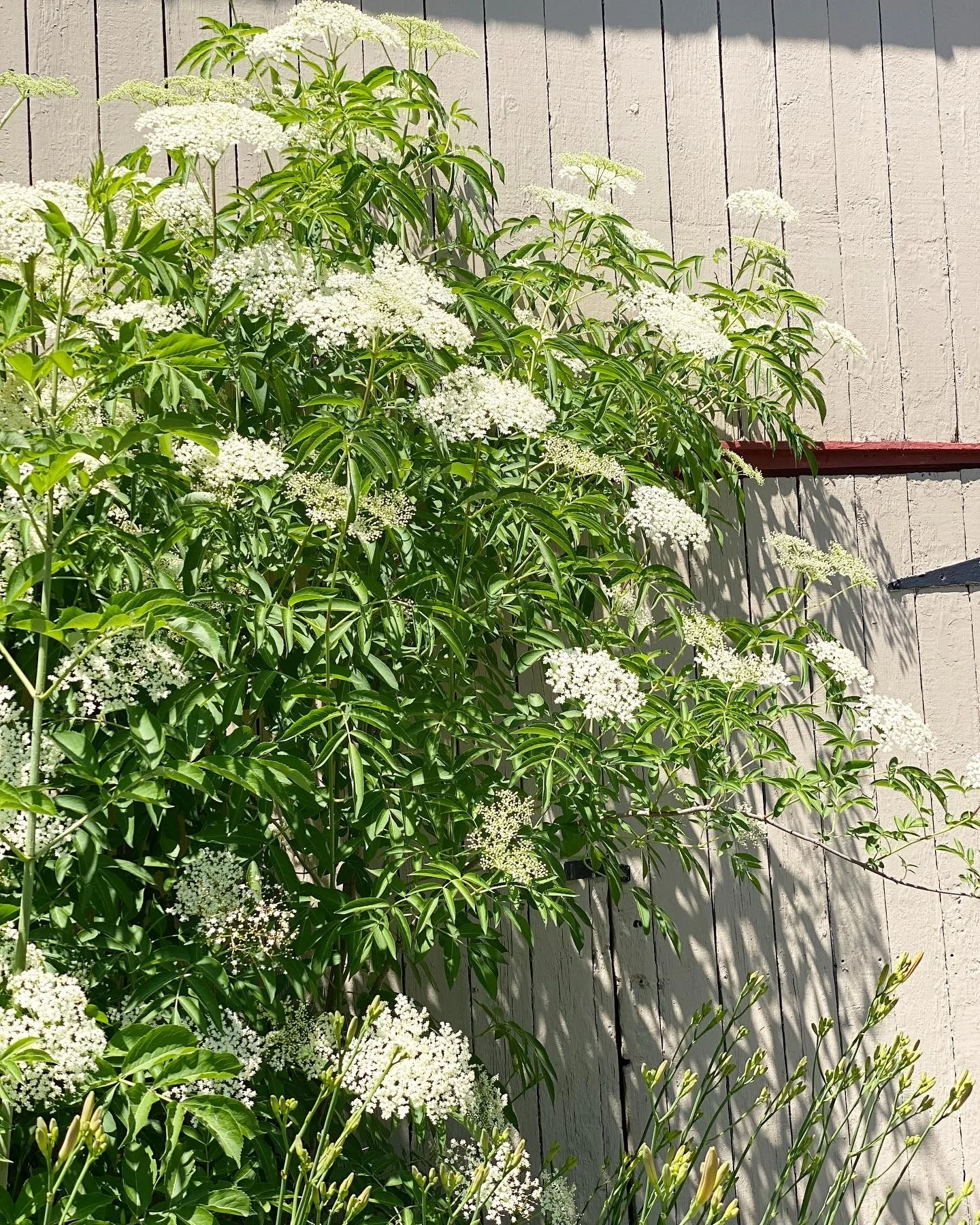
Elderberry shrubs growing against my barn grow well over 15 ft tall with wind protection.
March 20, 2026
As I write, we welcome the first official day of Spring 2026. Refreshing rains pour on my hometown of Lockport, nestled within the Great Lakes Region of Western New York. Birds chirp happily as winds rustle the branches of maple trees just on the brink of leafing out. The great greening of it all is coming soon and everyone is so ready for it!
In this post, we will discover the beauty of Elder - Sambucus nigra - a plant that I hold much reverence for after getting to know it intimately over the past 8 years. We will learn how to grow Elder in the most simple of ways - via cuttings - and we’ll discover how to care for this plant and use its medicine and wisdom to improve our body and mind.
We are selling our own farm-grown Elder cuttings in our online shop! 👇
Elderberry Cuttings ready to be stuck straight into wet ground. A minimum of 2 plants are required for cross-pollination.
The life cycle of elder as a useful, healthful plant
The Elder plant holds so many wonderful qualities… I’m not even sure where to begin. Let’s start with its greatness in the garden, farm and landscape.
Elder grows up to 12 feet in height and 6-8 ft width when grown in ideal conditions, which means Elder shrubs beautifully fill in empty spaces in the landscape.
With its naturally graceful form, Elder provides a beautiful backdrop in the garden and is one of the first plants I recommend when someone wants a natural privacy fence. Within just two seasons of planting, Elder will reach its full height and width when grown in full sun and with adequate moisture.
In mid-June thru July, Elder shrouds herself in lacy, ivory-colored umbellifer flowers, which are loved by an incredible array of beneficial insects and humans alike. Elderflowers can be harvested and turned into wine, cordials, jellies and jams, kombucha, healing herbal teas, or added fresh to just about any dessert you can think up.
As blossoms wither and begin to berries, we flower farmers prepare for harvesting. We add Elder’s long, graceful green berry-covered stems to bouquets and other floral arrangements. Indeed, unripe Elder branches (leaves removed) make a wonderful, long-lasting, textural cut flower filler!
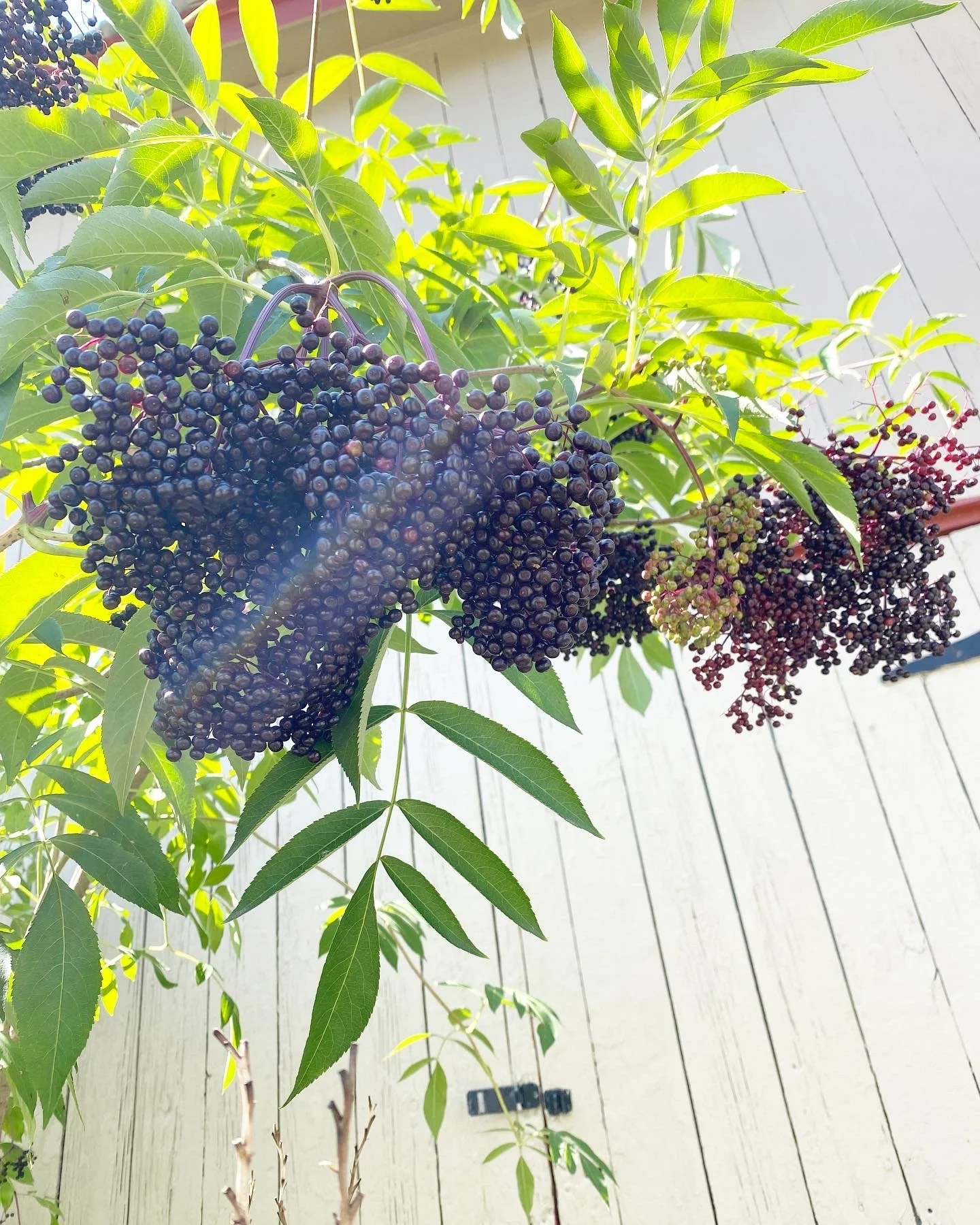
As August fades, Elder plants droop under the weight of thousands of tiny purple Elderberries, bursting with ripened goodness and begging for us to pick them. We tenderly cut the berry sprays off, leaving some for the native bird population to feast on.
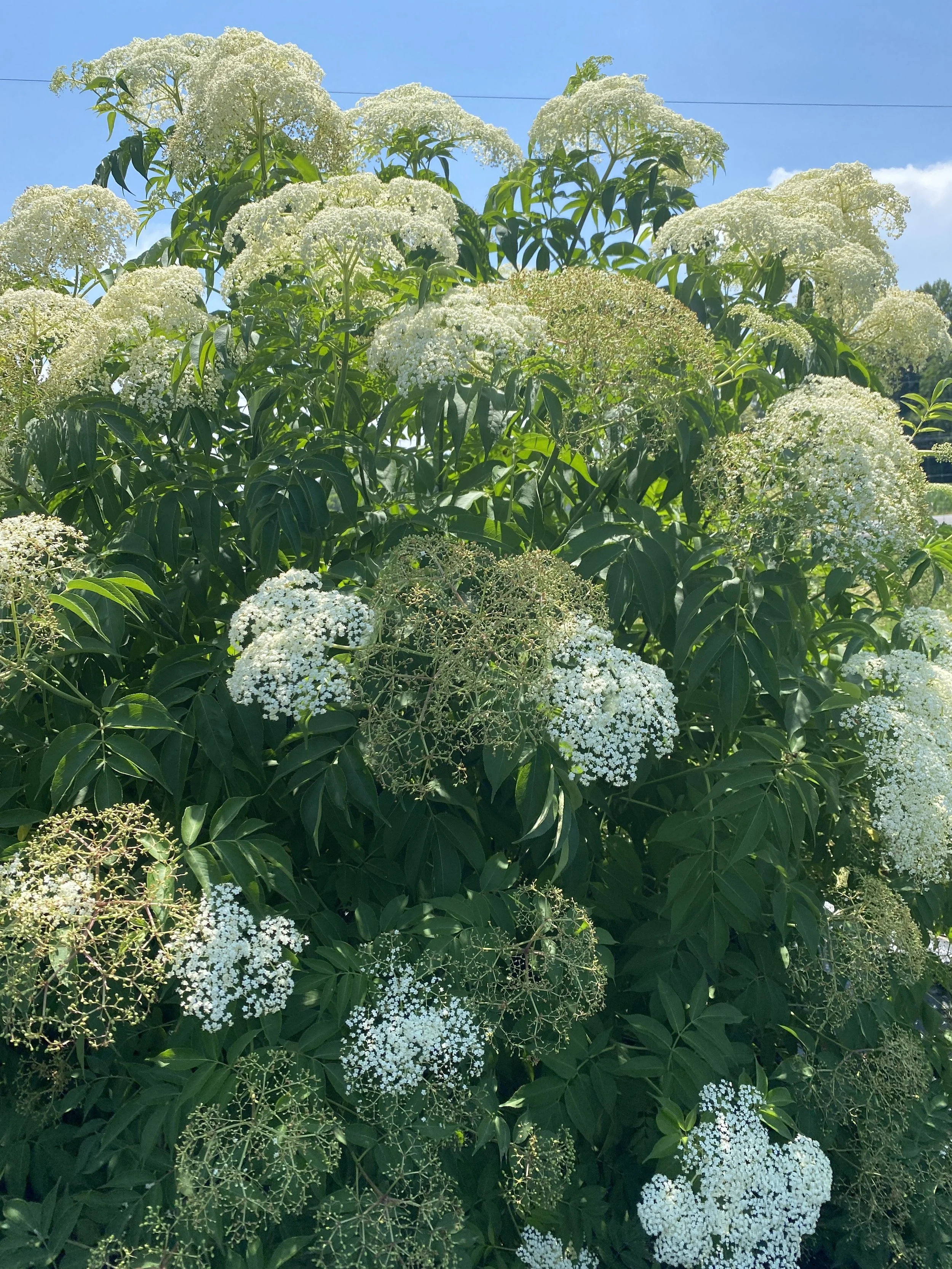
Elderflowers fading to berries toward the end of Summer.
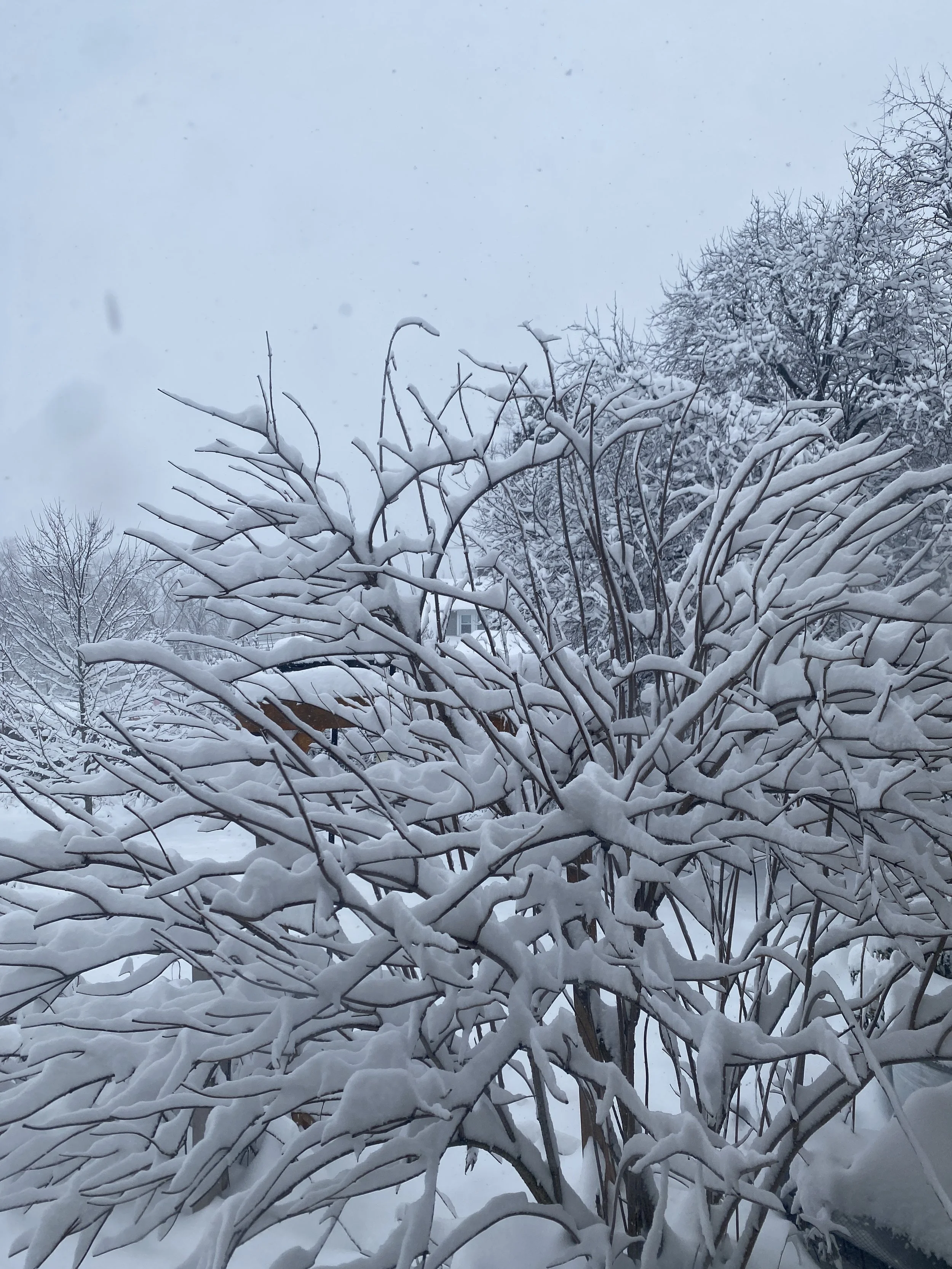
The same Elderberry shrub covered in a graceful, snowy blanket in winter.
Elder provides habitat and food for native wildlife
A plant native to North America, Elder provides a food source and habitat for birds and insects that are also native to North America.
The ripple effect this has on the garden, and the ecosystem as a whole, is incredible. In my gardening book, Growing Gorgeous Dahlias: The Regenerative Grower’s Guide to Abundant Dahlias from Garden to Flower Farm, I detail this effect in an entire chapter about planting for biodiversity — but here, I will briefly say that adding plants like Elder to your landscape will help increase the biodiversity of your yard, garden or farm that lead to easier pest management and better overall environmental health…
…and better environmental health means everything in your garden will grow to its fullest, most beautiful potential.
GROWTH FACT SHEET for elder shrubs
Common Names: Elder, Elderberry, Elderflower, American Elder, Canadian Elder
Botanical Name: Sambucus nigra (native species)
USDA Growing Zones: 3-7
Sun Exposure: Full Sun is recommended. Growing in Part Sun will result in less robust growth and flowering/fruiting, but will still grow.
Moisture: Naturally grows in ditches and prefers wet soils. Tolerates temporary flooding. Grows a deep tap root so it’s able to find water during drought. Needs frequent watering during first year then can be left alone indefinitely.
Special Requirement for Cross-Pollination for Elderberry Production: Two different varieties of Elder are required for cross-pollination for fruiting to occur. Just two plants are needed for cross-pollination and they can be planted within 1/2-acre of each other.
Pruning: Elder can be left completely alone to grow to full height and width. To control size of plants, cut down to base in late winter/very early spring — Elder will regrow to full height within the season. It is recommended to remove dead wood every spring.
Suckers/Spreading: Elder spreads laterally underground via root system — it’s not overly aggressive, but does require removing new shoots (suckers) if you don’t want the plant grouping to expand. Pull or dig suckers out of the ground (these could be replanted in another location). On the other hand, when left unchecked, Elder does a great job of filling in an empty spot in the landscape.
How to plant elderberry cuttings
One of the easiest, fool-proof ways to grow an Elder plant is via a cutting taken from another Elder plant.
A cutting is a section of branch that has only just begun to bud up and leaf out. When stuck directly into the ground, the cutting will root and begin to leaf out. Within a few weeks, you will have a new Elder plant on its way to producing a gorgeous crown of flowers and berries with practically zero effort.
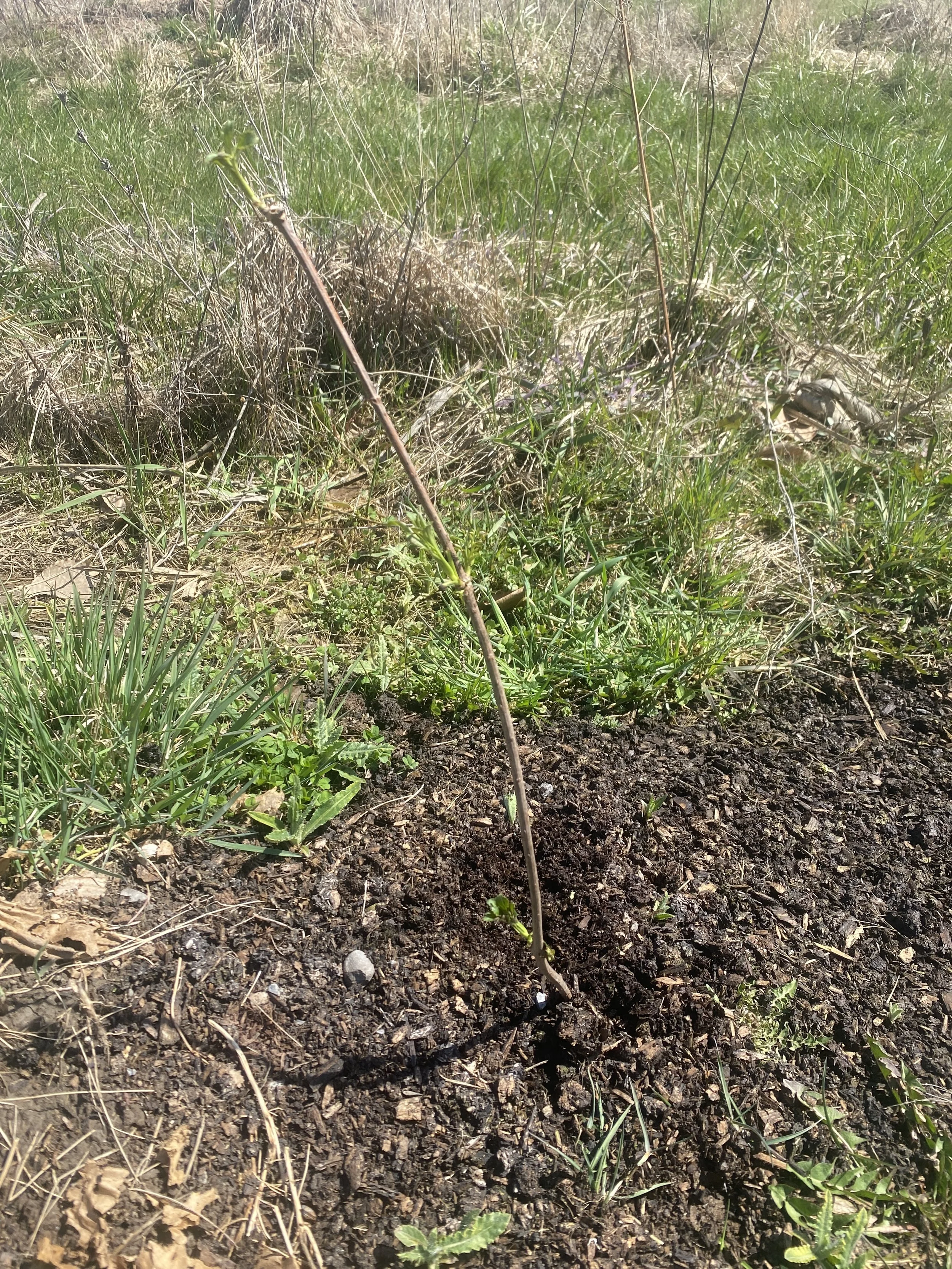
Elderberry cutting planted on our flower farm in Spring 2024. By Summer 2025, the plant was over 12 ft tall and 8 ft wide, smothered in elderberries.
Steps for planting elderberry cuttings…
Choose a planting area that checks these boxes:
Full Sun exposure, if possible (Part Sun is required, at a minimum)
Wet area, if possible (good places: where water naturally drains, near a drain spout, near a pond)
Enough room for a 12’x6’ plant if you intend on growing to full size
Clear a small area of grass and weeds (12”x12” circle is good enough) and break up soil with a shovel or fork if it is really compacted (this may not be necessary if planting in a garden bed)
2. Stick the cutting into the ground so that at least one (preferably two) leaf nodes are beneath the soil surface. Make sure the cutting is right side up. Any leaves that have begun growing should be trimmed back so the cutting does not focus on leafing out.
3. Water deeply. Don’t forget to plant a second one nearby, for cross-pollination.
The short version: Stick the cutting in the ground and water it. It’s that easy!
Caring for elderberry cuttings after planting
After planting and deeply watering your Elder cutting, simply walk away and leave it be for a few weeks. If you’re feeling curious, visit your Elder and tug on it — after 3-4 weeks, it will have formed roots and you’ll be able to feel the resistance. You may even see new growth!
The Elder will grow slowly over the first season. By the end of the year, it may only grow one new shoot. Leave it be. The following spring, the new shoot will bud up and your Elder shrub will be on its way to producing tons of beautiful food and plant medicine for you and your ecosystem.
Cooking and Eating Elderberries
Fresh elderberries should be cooked. When raw, elderberries are slightly toxic to humans. I’ve snacked on raw elderberries here and there in the garden (can’t tell me nothin’) without side effects, but you should definitely not consume more than a few berries without cooking them.
Elderberries can be made into delicious syrups, tonics, tinctures, jams, jellies and compotes, kombucha, and added to baked goods. I love adding elderberries into muffins and banana breads. Elderberries can also be dried in a dehydrator or in a low-temp 200 F oven and can be added to granola, trail mix, yogurt, or simply enjoyed on their own.
Related: My Low-Sugar Elderberry Syrup Recipe
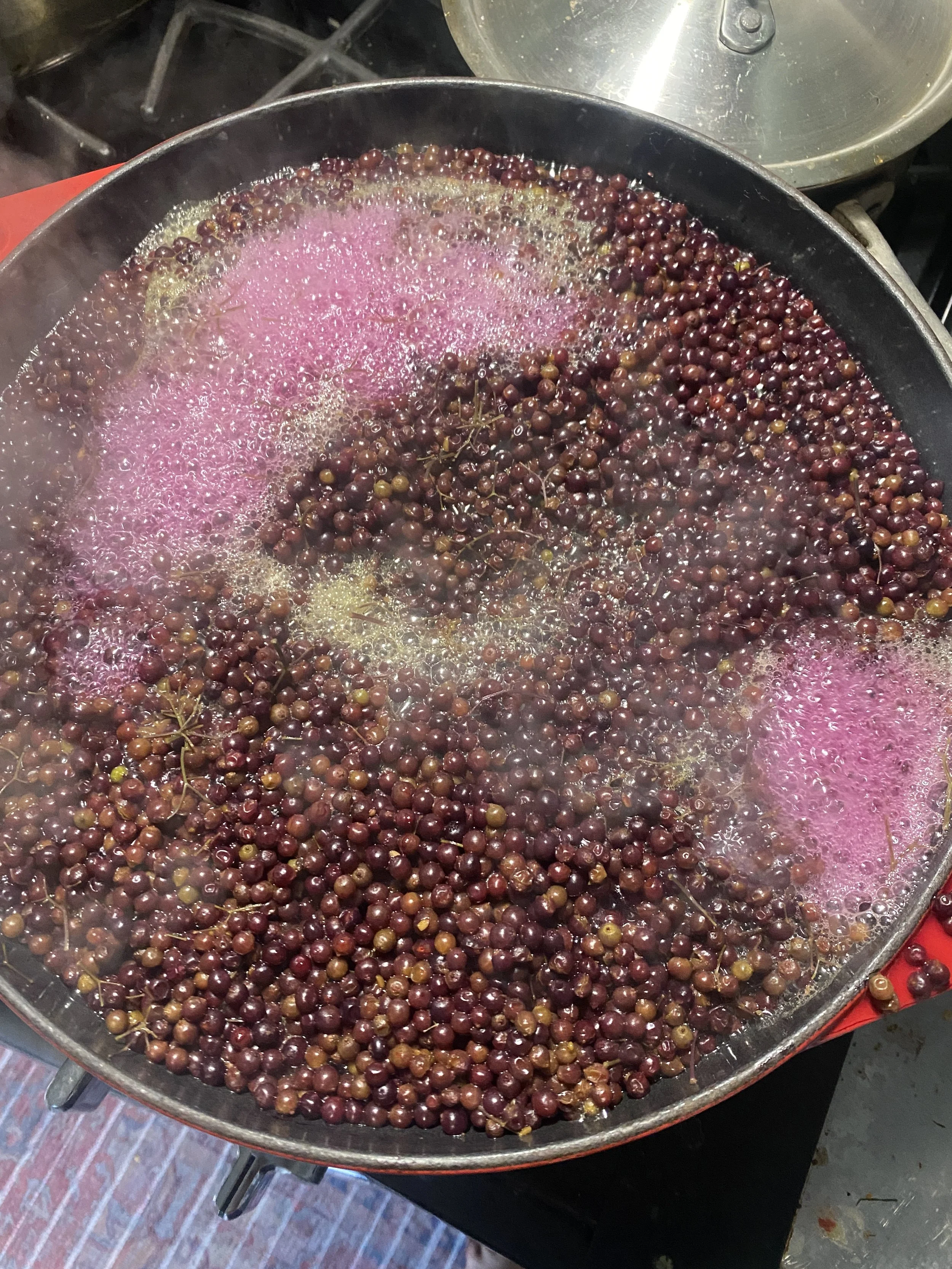
Boiling Elderberry Syrup on the stove from our fresh elderberry harvest.

Elderberry Spritz - my favorite non-alcoholic drink in the summer! Simply add a bit of Elderberry Syrup to plain seltzer water. Extra yummy with a sprig of rosemary.
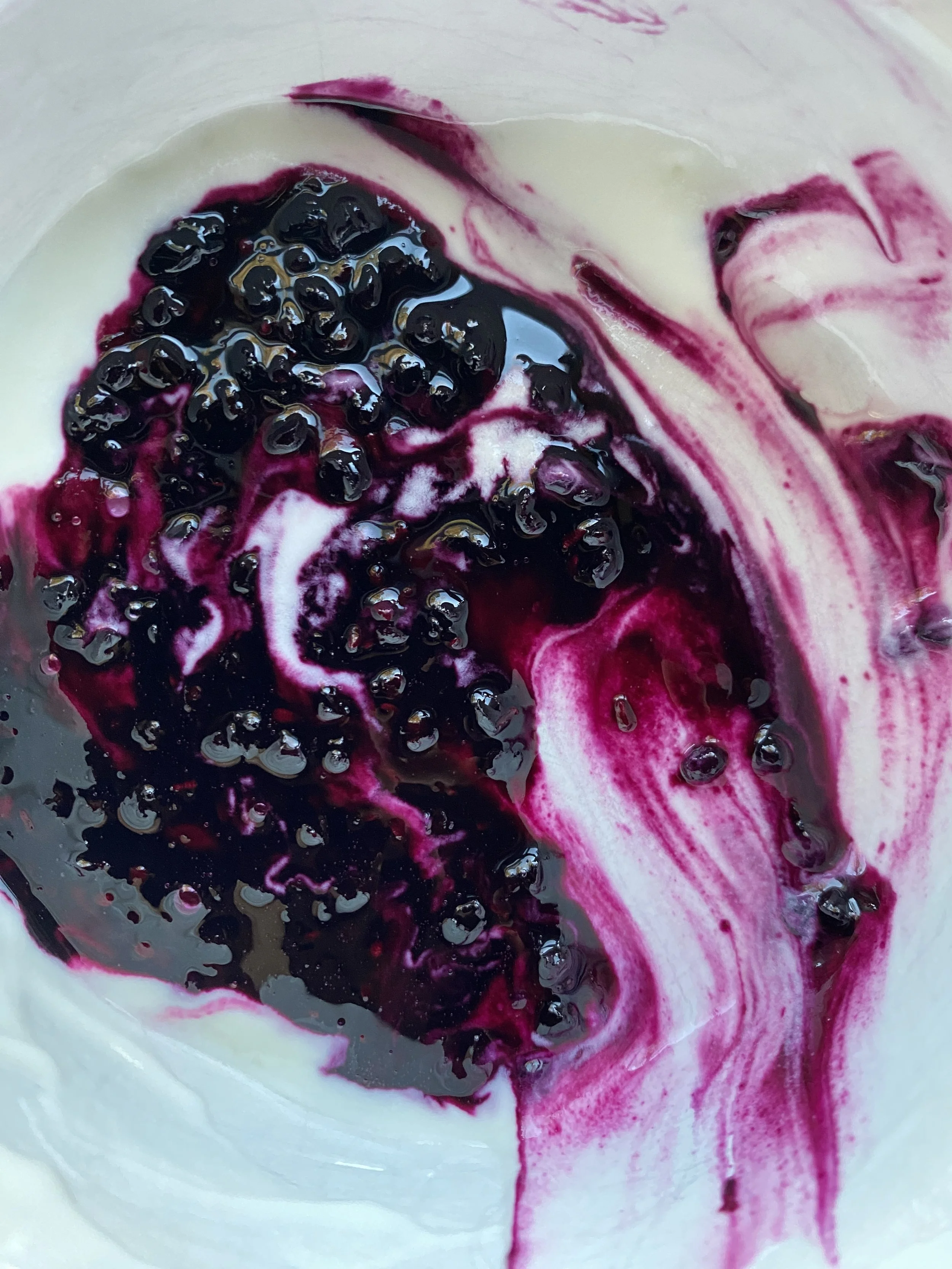
Elderberry Compote over yogurt makes a delicious dessert.
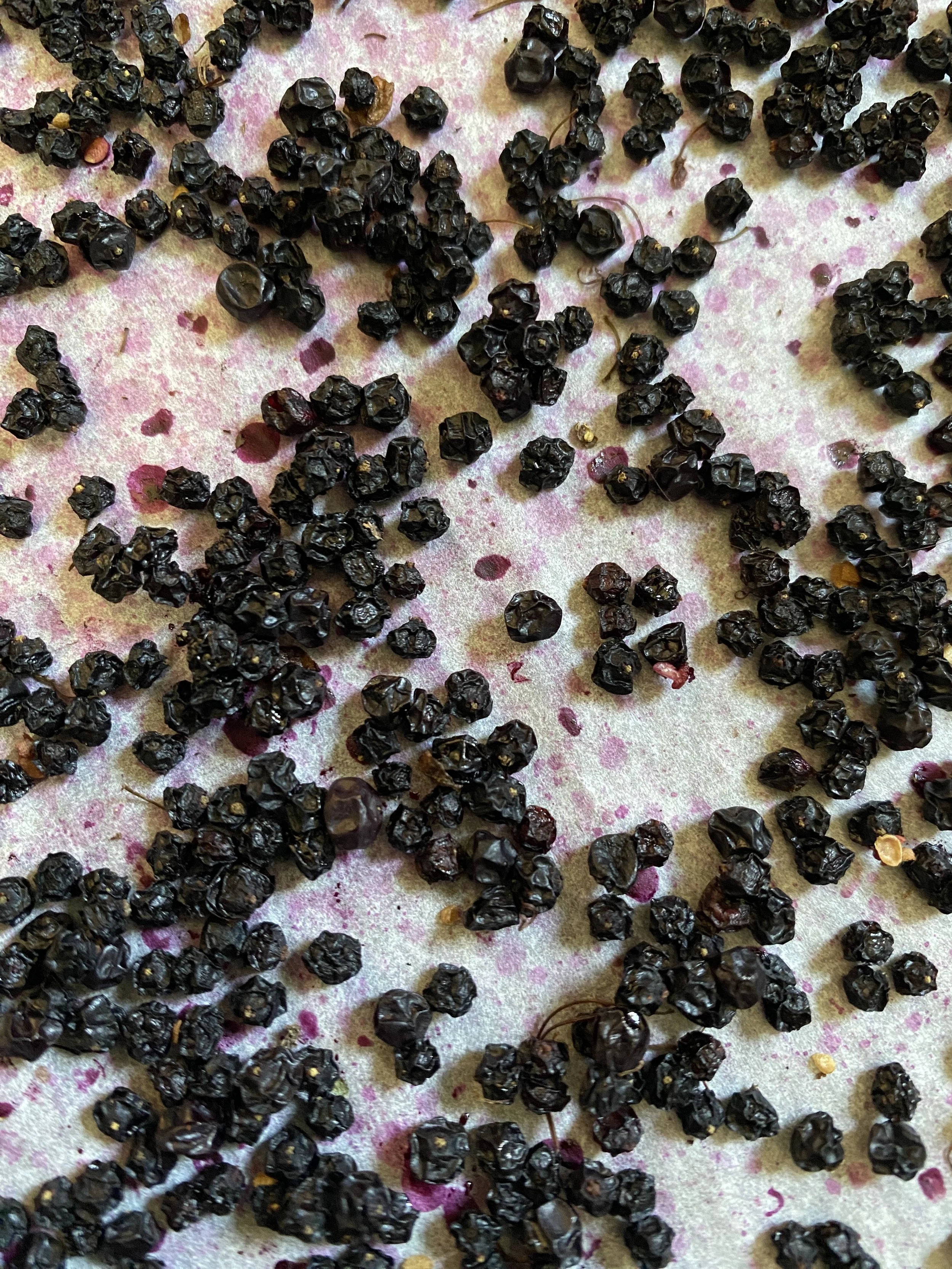
Dried elderberries in the oven. I made these to enhance our homemade granola.
Elderberries and the Immune System
There are so many sources that claim elderberries are revered for enhancing our ability to fight off sickness and infections; however, according to a study published in the National Library of Medicine, “…the evidence on both benefits and harms [of elderberry on the immune system] is uncertain and information from recent and ongoing studies is necessary to make firm conclusions.” (Source).
Furthermore, according to Harvard Health Publishing, elderberries have been proven to enhance the immune system in test tube and animal studies and theory has it that elderberries produce the same effect in humans.
I want to make it clear here that I am an enthusiastic proponent of natural plant medicine and I do believe the antioxidant-rich elderberry can provide supplemental benefits in times of sickness and distress. I also believe it’s important to understand and cite science. So what I will leave you with here is that while elderberry is indeed rich in antioxidants and nutrients healthful for our bodies, it’s probably not going to boost our immunity to the point where we can fight off any illness. I’m open to being wrong on that!
In conclusion…
I hope this post inspired you to plant TWO elderberries, be it from cuttings or plants from a store. Elderberries provide so much value to our environment and our health — and they are so easy to grow, why not try it!
peace, love, and elder magic,
Fran Parrish