
7 Spring Dandelion Recipes for Strengthening Relationship with Earth

May 12, 2026
I have an affinity for the plants that grow around us — and especially the weeds that are edible, medicinal, and provide the opportunity for a closer connection with earth.
The dandelion is blooming full force across the northern hemisphere of the U.S. right now and I would be remiss to not share the myriad of ways I’ve enjoyed this plant over the past few weeks.
My ode to the dandelion is this: Where humans attempt to eradicate you, your presence grows stronger. Your resiliency is unmatched and I am inspired by you to live more resourcefully. Your roots stretch deeply into the earth with seemingly little effort, pulling up nutrients and minerals that you give freely without complaint. Your presence is a gift, and I am ever-thankful for the nutrition you provide my body.
Related: Foraging My Yard: Early Spring in WNY
Why dandelions are an amazing wild food
The entire dandelion plant is edible from roots to shoots to leaves to flowers. Dandelion is a bitter herb that, when ingested, produces extra bile in the liver and gallbladder. Bile produces extra digestive enzymes that help our entire digestion and liver detoxification processes along. Anyone who has fatty liver disease or elevated liver enzymes in blood work (AST/ALT) would benefit from eating dandelion daily.
The dandelion plant is full of vitamins and minerals, polyphenols, flavonoids, and the roots are a prebiotic (food that is necessary to sustain beneficial probiotic bacteria in your gut).
Altogether, the dandelion is a magnificent wild workhorse, protecting our bodies against inflammation, oxidation (aging of cells), liver damage, high cholesterol, high blood sugar, and so much more. Disclaimer, though: consuming dandelion should enhance your health journey — it should not replace traditional medical practices recommended by your doctor.
take caution when picking dandelions in public areas
Dandelion is a completely safe food, as long as the dandelion does not come from an area sprayed with herbicides/pesticides. I would also avoid digging dandelions from public walkways or places with high vehicle traffic because the soil in these areas are generally more polluted than a secluded backyard or field.
my go-to recipes for dandelion: 7 ways to prepare dandelion in Spring
Spring and fall are the two seasons when I go crazy over dandelions. In spring, tender juicy leaves make wonderful sauces and additions to soups and salads, while pollen-filled blossoms make delicious drinks and jellies.
Here are some of my favorite ways to use dandelions in Spring.
SPRING DANDELION FOODS (RECIPES IN THIS POST)
Dandelion & Walnut Pesto
Whole Dandelion & Nettle Non-Alcohol Tincture
Dandelion Probiotic Fizzy Lifting Drink
Dandelion Greens Stovetop Infusion
Liver-Loving Smoothie with Dandelion Greens
Dandelion Blossom Jelly
Freezing Dandelion Greens for winter sustenance
OTHER WILD FOOD RECIPES
7 Spring Dandelion Recipes
Dandelion & Walnut pesto (Vegan, Gluten Free)
I made this pesto with a bit of doubt, assuming it would be way too bitter to truly enjoy eating. I was completely wrong. This pesto is now one of my favorite things to make and always have in the fridge in Spring. We enjoy eating it on pasta, roasted sweet potatoes, frittatas, toast, and even as a dip with crackers or carrots.
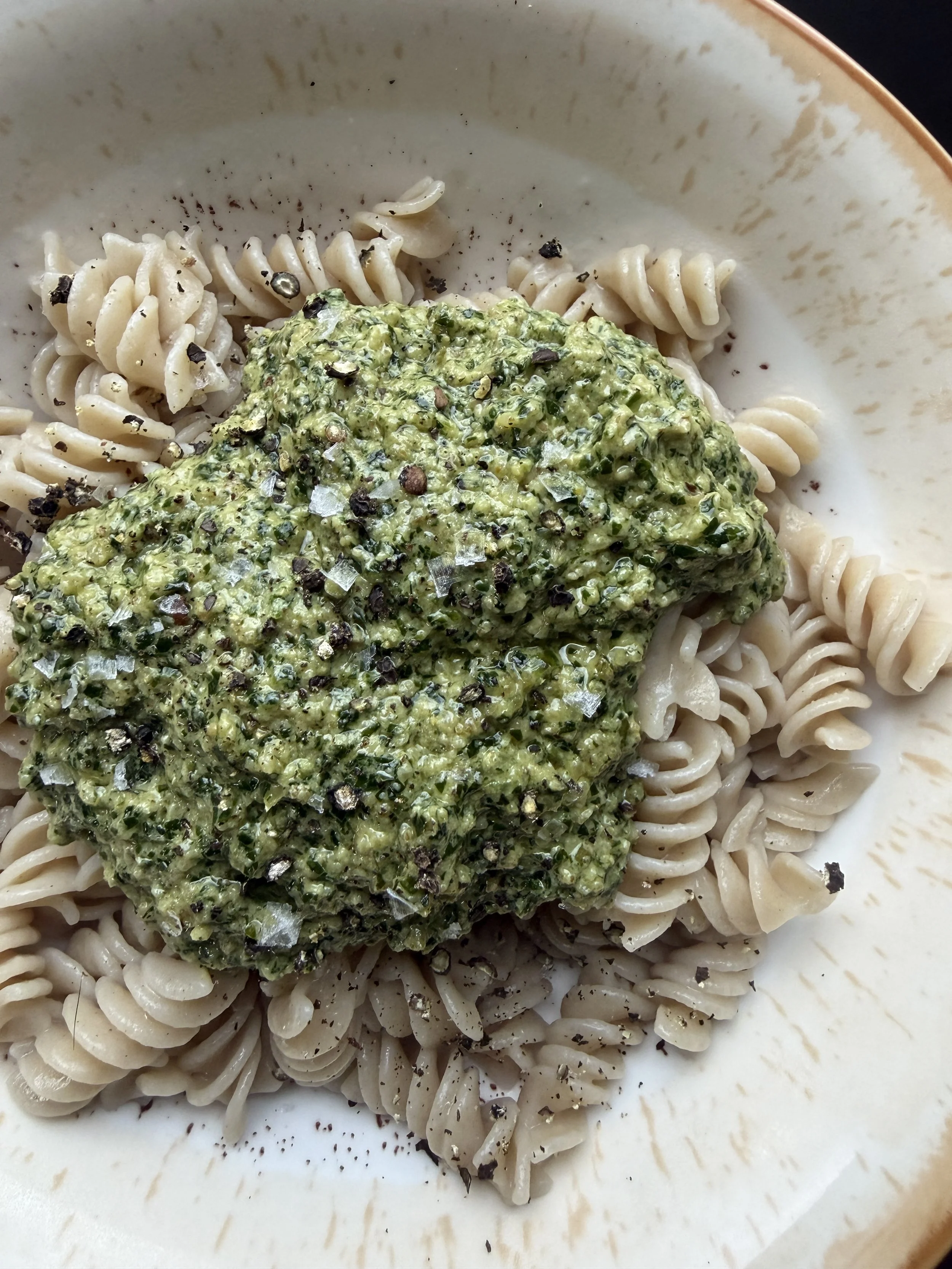
Ingredients for ~2 cups of pesto:
2 cups dandelion leaf
1 cup raw walnuts
1/4 cup nutritional yeast (or grated parmesan)
1/4-1/2 cup EVOO (I love the taste of Graza)
Juice & Zest from 1 Lemon
2 garlic cloves
Salt and Pepper to taste (I love finishing with Maldon Salt Flakes before serving)
Method:
Add all ingredients to a food processor and process until fully incorporated, scraping down sides of food processor as needed. Add water to thin to desired consistency.
Whole dandelion & Nettle tincture (non-alcohol dandelion Glycerite)
Tinctures are herbal medicine. Allowing herbs to sit in vegetable glycerin or high-proof alcohol for a period of time allows the liquid medium to extract all the wonderful healing properties of the plant into the liquid. The resulting extraction can be consumed in small amounts later on. Traditionally, tinctures are made with alcohol, such as Everclear vodka or brandy. I prefer to make tinctures using vegetable glycerin, to avoid the extra load of alcoholic toxins on my liver. This version of a tincture is called a Glycerite, and yields a pleasantly sweet, herby flavor that is wonderful added to tea or enjoyed directly off a spoon.
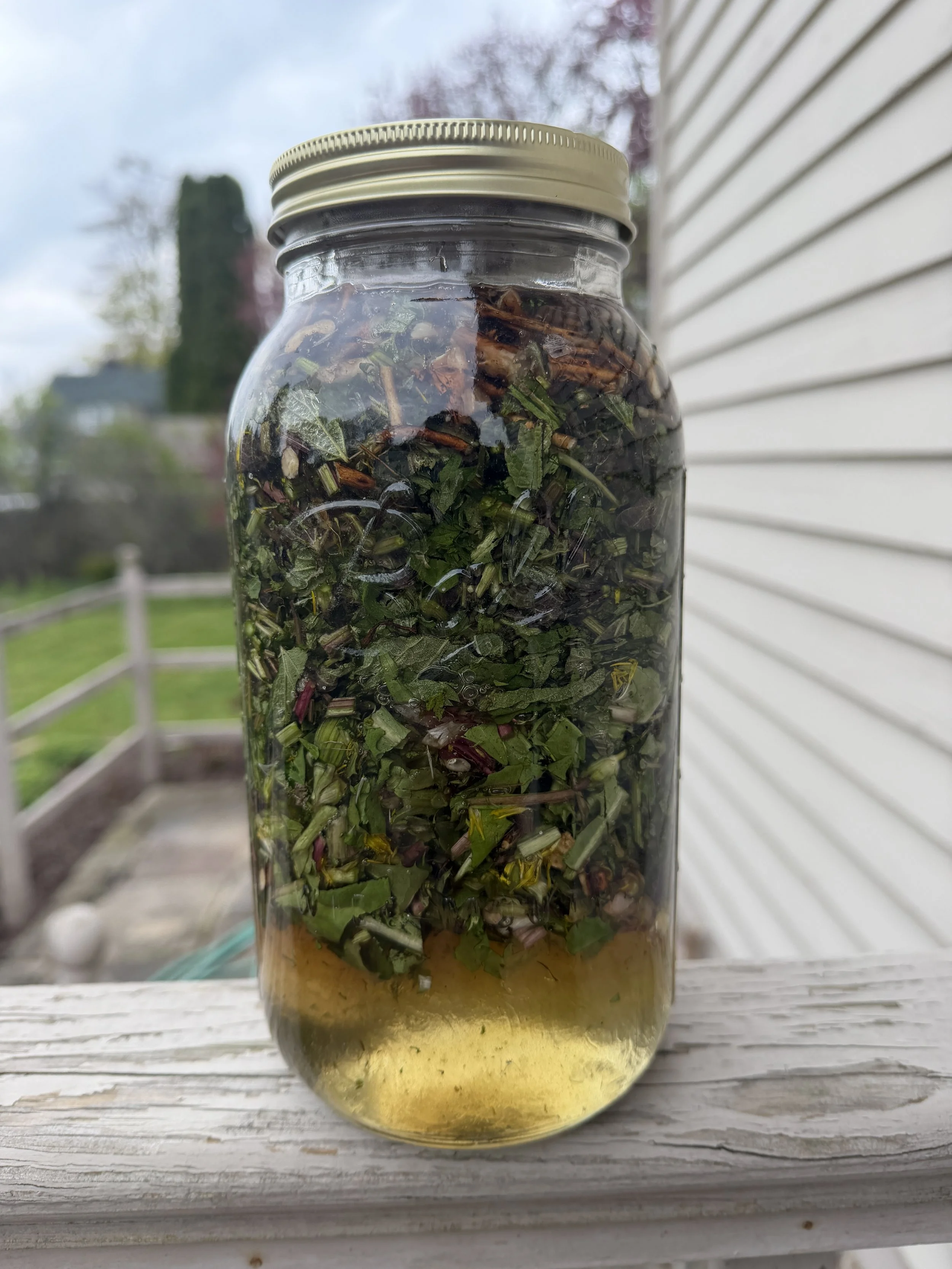
Ingredients:
A Jar the size of your choosing (1/2 pint to 1 gallon)
Whole dandelion plant (roots, shoots, stems and blossoms) - washed and chopped finely
Stinging nettles (shoots, leaves) - washed and chopped finely. Wear gloves! The nettles will sting your hands.
The amount of chopped plants will fill 2/3 of the jar
Food-grade Vegetable Glycerin (amount will fill the remainder 1/3 of the jar)
Method:
After thoroughly chopping the plants, fill the jar 2/3 full with the fresh plant material. Pour vegetable glycerin over top. Use a clean knife or chop stick to help push the glycerin down into the plant material until everything is fully coated. Top off the jar with more glycerin until full.
The extraction will take 4-6 weeks (I do 6 weeks for maximum potency). Store in a dark place. Turn the jar upside down daily (if you can remember). After 4-6 weeks, strain the plants from the glycerin, squeezing as much liquid from the plants as you can. Enjoy 1-3 teaspoons per day.
Dandelion Probiotic Fizzy lifting Drink
The method for making this probiotic drink is similar to making a ginger bug or pineapple tepache. The natural yeast present on the dandelion flowers consume the sugar, resulting in a naturally fermented, refreshingly fizzy probiotic drink.
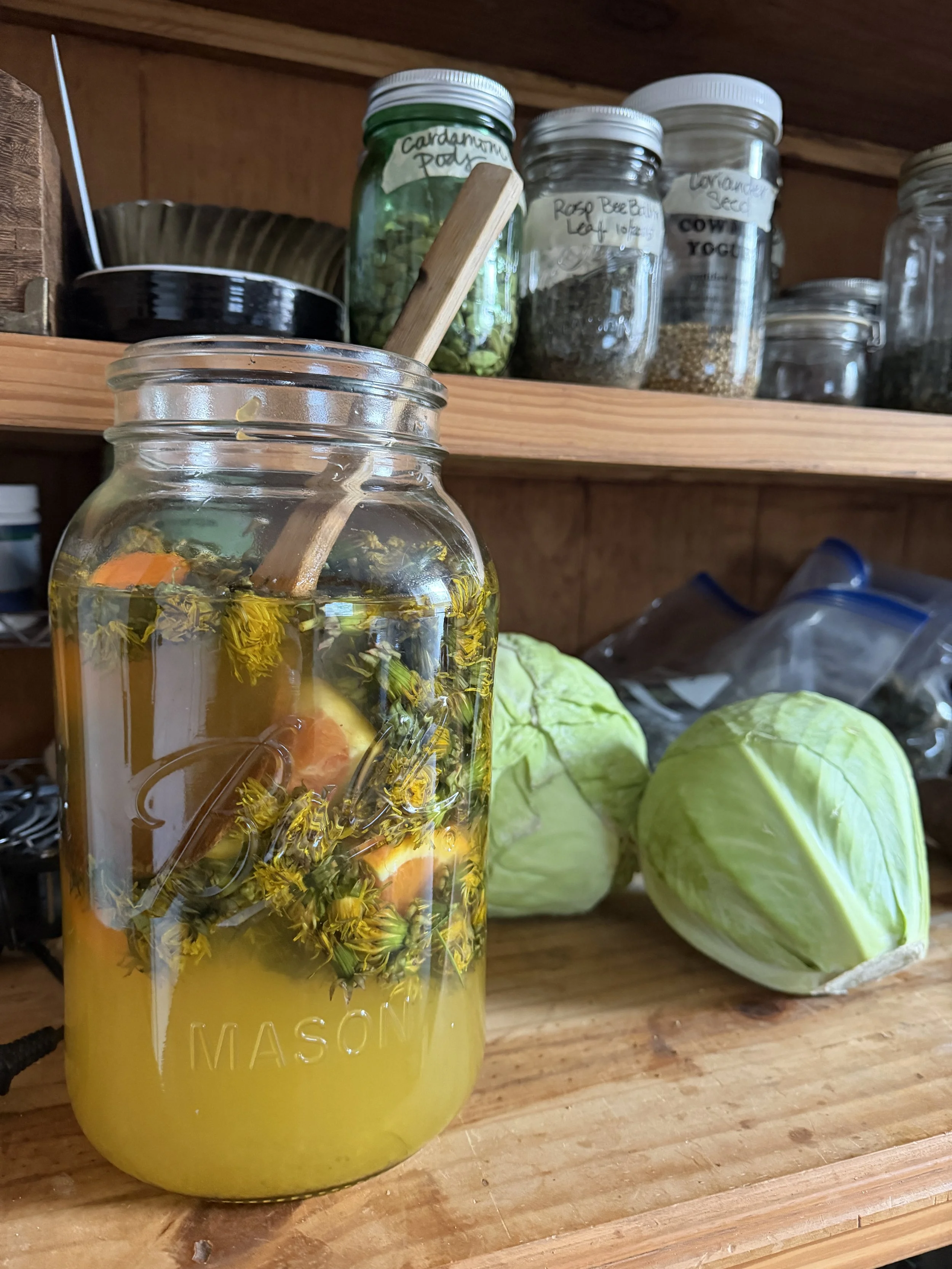
Ingredients:
6 cups whole dandelion heads (do not wash!)
1 cup organic cane sugar
4 quarts water
1 orange, chopped into large pieces
1 lemon, chopped into large pieces
Optional: add other herbs like lemon balm, mint, or nettles, or different fruits like blueberries and raspberries.
Method:
Boil the sugar with 2 cups of the water until sugar is dissolved.
Add all ingredients to a large jar, bowl or other vessel. Cover lightly with cheese cloth or tea towel.
Keep at room temperature for 3-7 days, stirring daily, until you see bubbles forming on their own. It will take longer for the drink to ferment if your room temp is below 70 degrees.
When natural bubbles form, strain and transfer the liquid to swing-top bottles or mason jars and put in the fridge. Within a few days, the drink will become naturally fizzy. Be careful when you open your vessels — there could be pressure!
DANDELION GREENS STOVETOP INFUSION (DANDELION LEAF TEA)
This is perhaps the easiest way to enjoy the benefits of dandelion leaf. Here, we make a simple tea on the stove using fresh dandelion leaf. Enjoy with honey or take it straight.
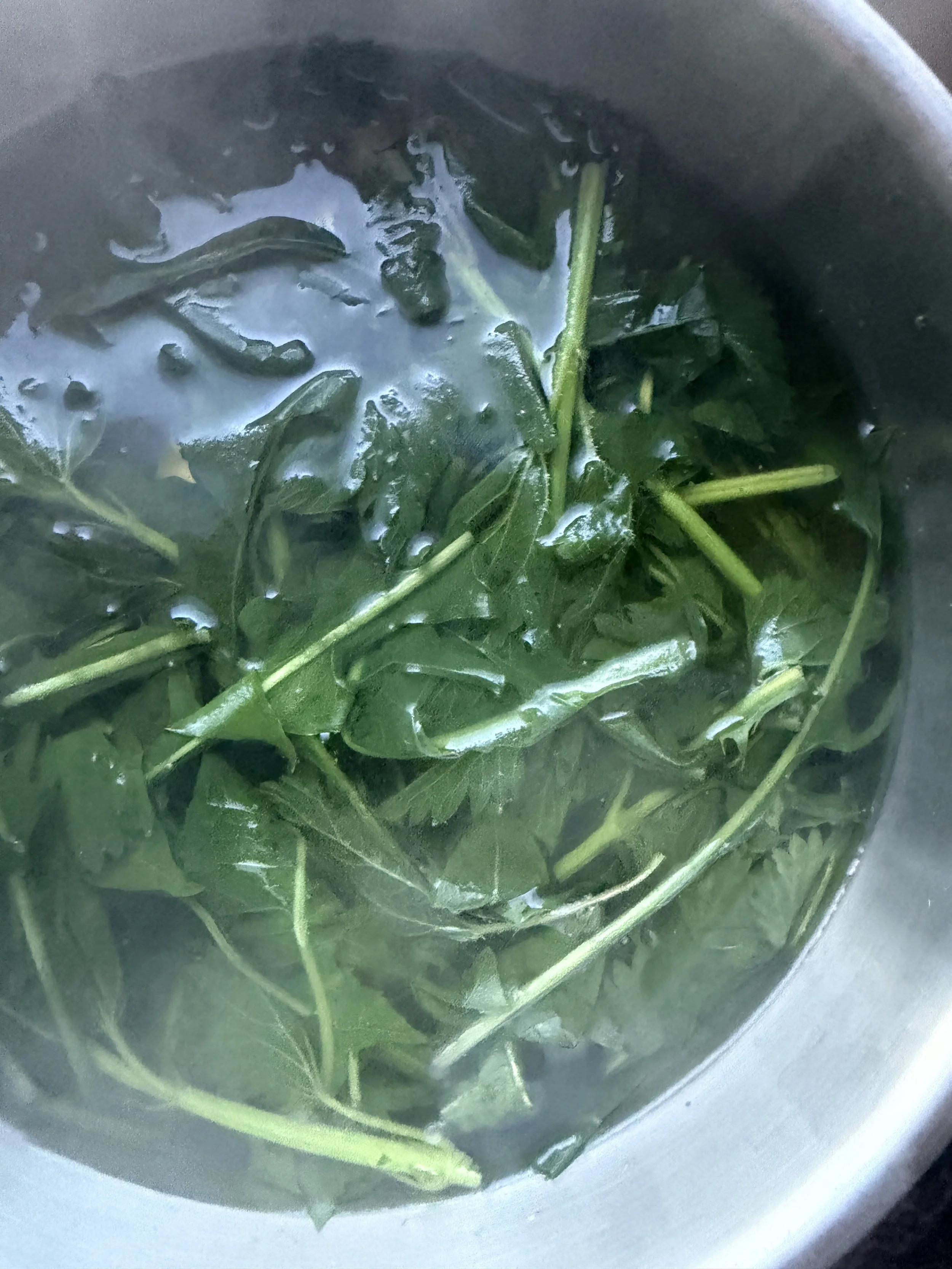
Ingredients:
Handful of dandelion leaves
Optional: add other fresh herbs like nettles, lemon balm, mint, thyme, or bee balm leaves for added flavor and health benefits.
Method:
Gently simmer leaves on the stovetop for a few minutes.
Strain the greens and enjoy the infused water with honey or by itself. You could make big batches of this and store it in the fridge to enjoy herbal iced tea throughout the week.
LIVER-LOVING SMOOTHIE WITH DANDELION GREENS
This is a genius way to reuse those stovetop boiled dandelion leaves. Throw them in a smoothie! Alternatively, you could use fresh-picked dandelion greens. The other ingredients in this smoothie also support liver detoxification. Berries are a lower-sugar fruit option (compared to tropical fruits) and packed with antioxidants and flavonoids. Avocado is a satiating, healthy fat and gives this smoothie a super-smooth consistency. Flaxseeds and chia seeds are two incredible sources of anti-inflammatory Omega-3s. The protein powder is optional, but I love it because it keeps me full for hours, even while exerting myself on the farm.
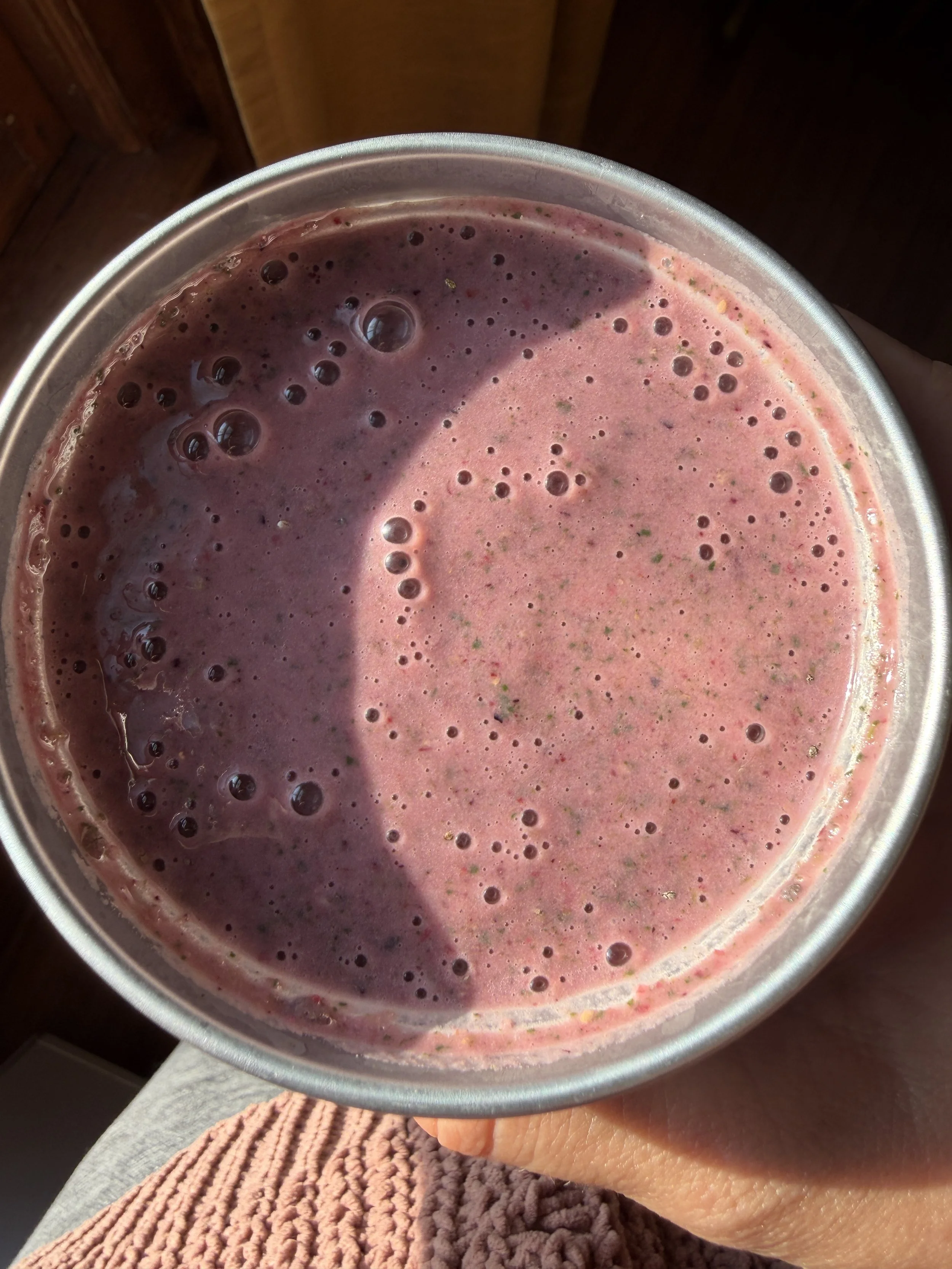
Ingredients for (1) 16-oz smoothie:
Large handful of fresh dandelion greens (or reuse cooked greens from a stovetop infusion - cool in fridge beforehand)
1/2 avocado
1 cup frozen berries (blueberries, raspberries, strawberries, blackberries or any combination)
Protein powder (I love Om Plant-Based Mushroom Protein Powder, Vanilla Flavor)
1 tbsp ground flaxseeds
1 tbsp chia seeds
Liquid to your desired consistency: Almond milk for a creamier texture or coconut water for a lighter smoothie
Method:
Blend up in a high-powered blender and enjoy right away.
Dandelion blossom jelly
A sunshiney, honey-flavored jelly made from infused dandelion blossoms. This jelly is a bit of a labor of love — you must take the time to pick out all the tiny petals from the green sepal at the base of the flower head. My husband, Jesse, and I spent an hour doing this across from each other at the dining room table and we enjoyed it so much as we figured the best ways of removing the tiny petals. Connection and being in the moment with one another is what slow food is all about!
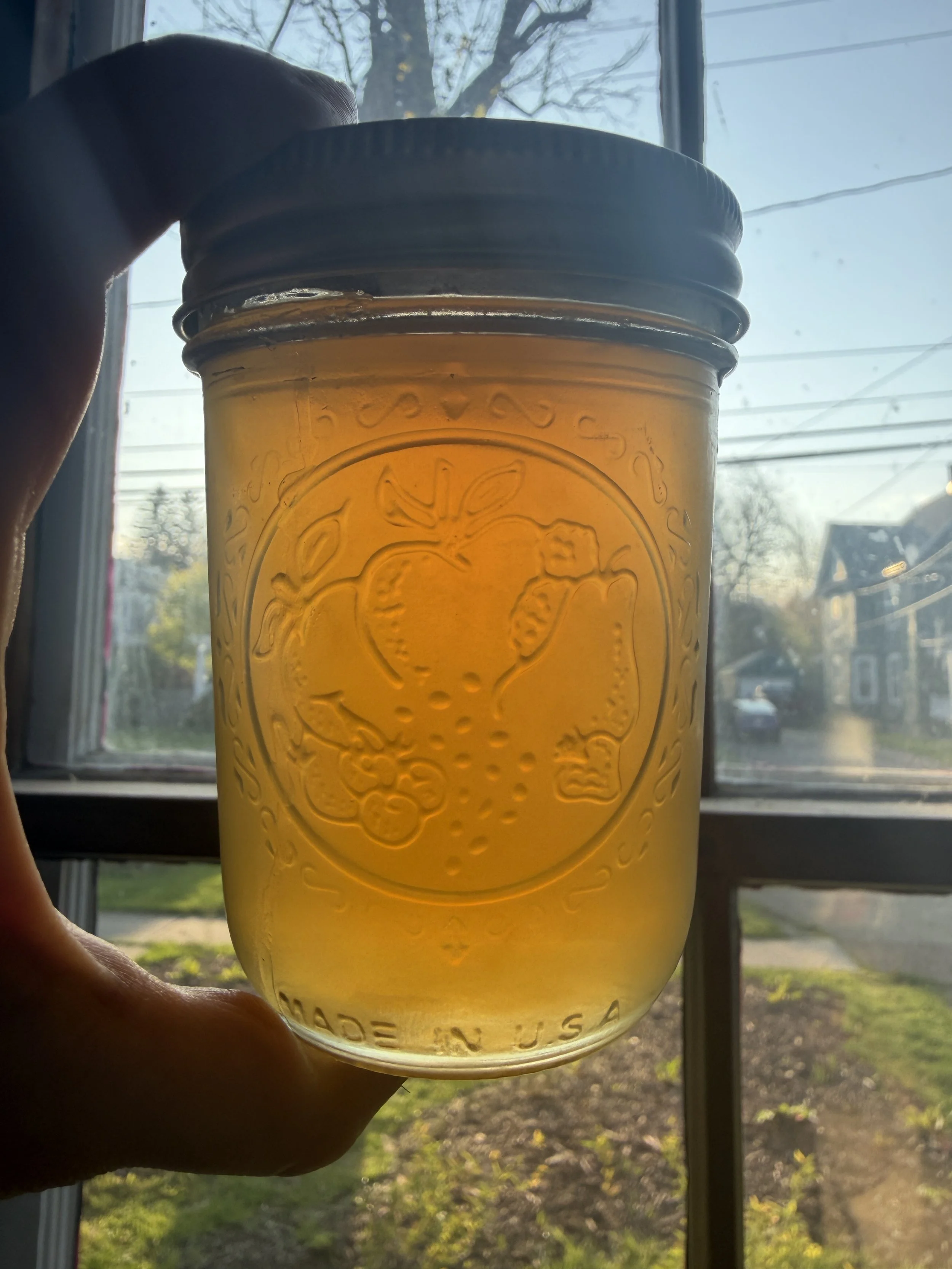
Ingredients (makes 5-ish 1/2 pint mason jars of jelly):
4 cups dandelion petals
4 cups water
4 cups organic cane sugar
1.75 oz powdered fruit pectin
2 tbsp fresh lemon juice
Method:
Start by separating the dandelion petals from the green sepals. This step is time consuming and best done with an enthusiastic partner. There should be no green parts — only petals!
Boil the water and infuse the petals for 30 mins. Strain petals and bring the strained liquid to a boil. Add sugar to dissolve.
Bring liquid back to a rolling boil and add fruit pectin. Boil for exactly 1-2 minutes. This amount of time sets the pectin. Finish by stirring in the lemon juice.
Pour liquid into jars. At this point, you can water-bath can them for pantry storage, or store in the fridge. The jelly will fully set after 48 hours.
Freezing dandelion greens and roots for later
Last winter, I longed for fresh greens other than spinach and arugula from Aldi and Trader Joe’s. Because of this winter-long deprivation, I’ve been inspired to preserve as much fresh, healthful food as I can while it’s in season. When dandelions are in bloom, now is the time to dig them up whole and save the greens and roots for months when fresh food is no longer in abundance. We definitely underestimate the resourcefulness of freezing foods for later!
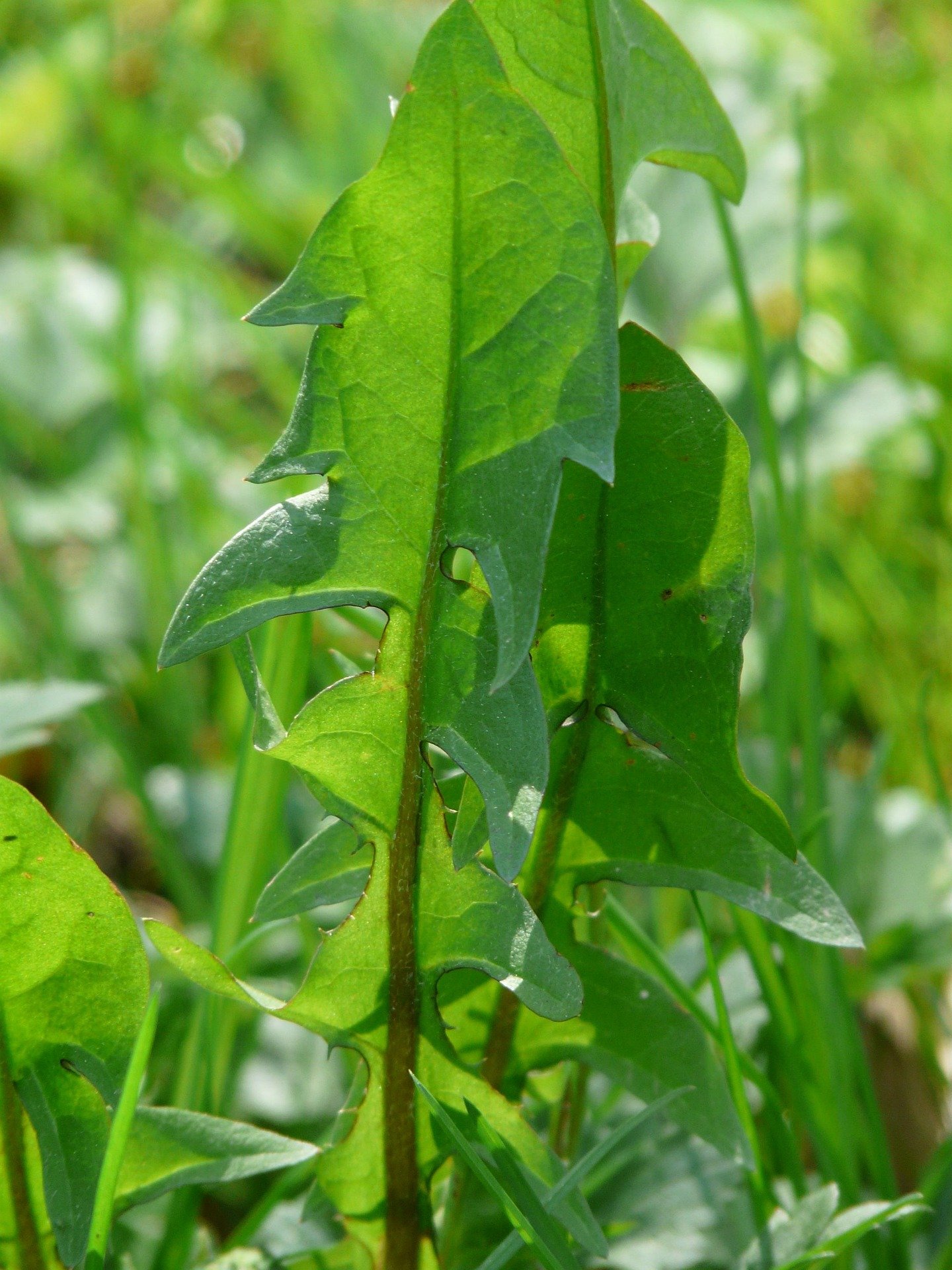
Method:
Dig up as many dandelions as you can handle digging. Spray all the dirt off with a hose.
Go through each plant and pick off the leaves and cut off the roots, putting each into a pile.
Once you’ve gone through all the plants, take the leaves inside and gently steam them for a few minutes on the stovetop. Cool the leaves and add them to one big freezer bag or several smaller freezer bags in portions. Label and throw in the freezer.
For the roots, peel them as best you can with a potato peeler. Leave whole or chop into bits. Throw in a freezer bag into the freezer. Dandelion roots can be enjoyed in soups, stews, stocks, or roasted as a main dish with other root vegetables.
Truly, there are so many ways we can enjoy dandelions in the spring and these recipes only scratch the surface of possibilities. I hope you took inspiration from this post to try at least one of these recipes/methods, or perhaps you feel compelled to look closer at the wild plants around you next time you’re outdoors.
We are surrounded by beauty and hope everywhere we look, if we’re willing to see it.
peace, love & plant magic,
Fran Parrish